
Texas Ranches
Designing a scalable editorial-commerce platform where culture, trust, and revenue reinforce each other.
Context
Texas Ranches had grown into a respected brand at the intersection of land, culture, and lifestyle. Its digital presence, however, was fragmented. Editorial content lived in silos. Listings and services were disconnected. Partner value was manually assembled rather than productized. Revenue relied on bespoke sponsorship packages that did not scale.
At the same time, leadership had committed to 1.5 to 1.6 million dollars in ARR within 12 months of launch. Founding partners were already secured. Inventory, placements, and reporting needed to become operationally legible.
The risk was not under monetization. It was brand erosion if commercialization felt intrusive or ad driven.
The core question became:
How do you productize revenue without compromising editorial integrity?
This was not a redesign problem. It was a governance problem disguised as UX.
Critical Tension
Partnerships initially relied on tailored sponsorship packages. Editorial teams were cautious of standardized placements, concerned that visible monetization would erode trust. Leadership required predictable revenue to support ARR targets.
The system could not prioritize one dimension without destabilizing the others.
Revenue needed structure, not flexibility. Editorial trust required explicit separation, not subtle blending.
The challenge shifted from designing pages to defining rules.
Driving Alignment Across Editorial and Revenue
To bridge tensions between editorial integrity and revenue targets, I facilitated structured workshops mapping content types to monetization surfaces.
By visualizing inventory as a finite system rather than flexible ad space, teams developed shared language around placement logic.
Once inventory became legible, resistance shifted from philosophical concern to operational refinement.
Alignment was achieved by making structural rules explicit.
The Problem Space
TXR needed to simultaneously serve four audiences:
- Visitors discovering Texas land, culture, and lifestyle
- Members building an ongoing relationship with the brand
- Partners, brokers, and brands buying visibility
- Internal editorial and partnerships teams managing operations
Each group held different mental models. Most platforms fail by optimizing for only one.
Key tensions included:
- Editorial discovery versus monetization surfaces
- Brand storytelling versus inventory legibility
- Flexibility versus operational clarity
- Scale versus trust
Solving this required clear layers, explicit rules, and shared language across product, editorial, and revenue.
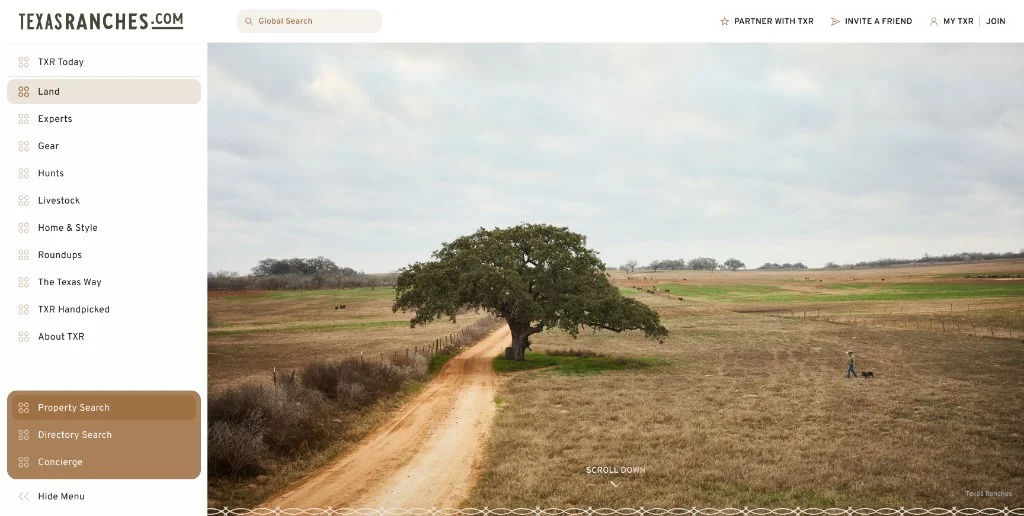
System Architecture
The platform was structured as layered intent rather than isolated pages.
Editorial layer
Storytelling and culture remain primary and clearly distinct.
Discovery layer
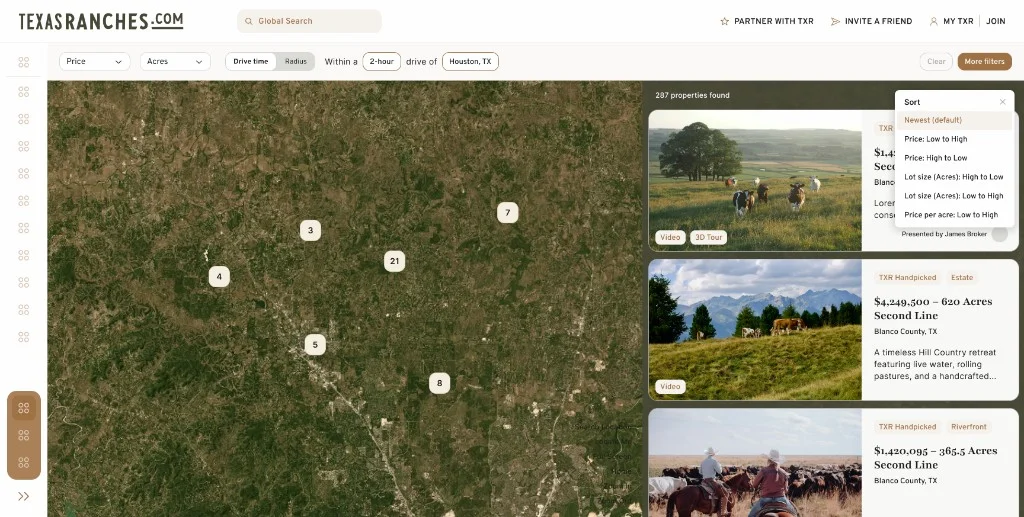
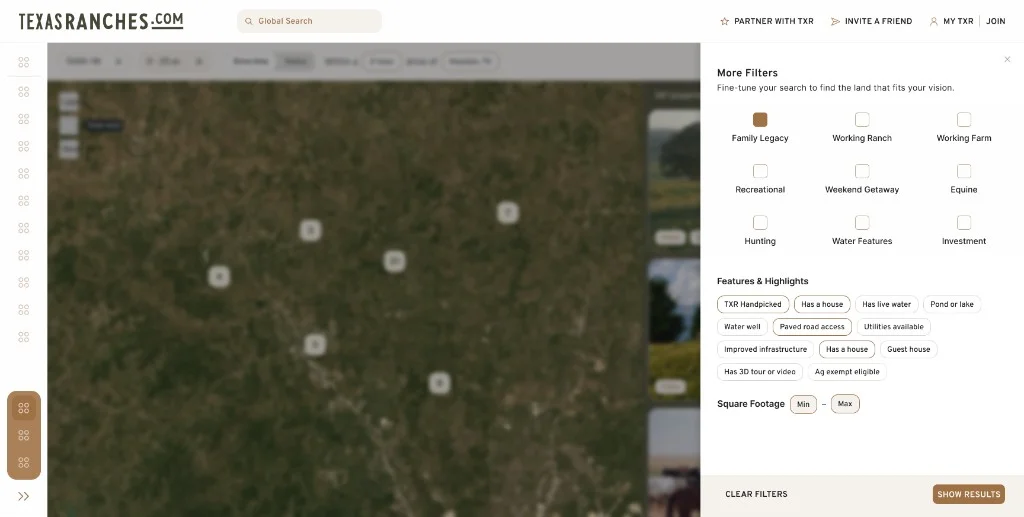
Search and directory systems unify listings, services, and editorial through a shared taxonomy.
Commerce layer
Finite, productized placements are mapped directly to defined inventory.
Governance layer
Explicit labeling, structural separation, and reporting systems protect trust while enabling revenue visibility.
This architecture clarified purpose and scaled complexity without confusion.
Constraints That Shaped the System
Editorial first experience
Monetization could not resemble traditional advertising.
Finite and understandable inventory
No unbounded placement sprawl.
Clear separation between editorial and paid content
Trust was non negotiable.
Scalability across regions and seasons
Texas is not a single market.
Operational usability for internal teams
Editors and partnerships needed systems they could actually run.
These constraints eliminated common shortcuts and forced principled platform design.
Key System Decisions
-
1
Designed layered architecture instead of page level solutions
Clarified intent across editorial, discovery, and commerce while preventing overlap.
-
2
Established a shared content taxonomy
Created structural alignment across product, editorial, and revenue teams.
-
3
Productized revenue through finite placement inventory
Replaced bespoke sponsorship packages with legible, repeatable offerings.
-
4
Enforced explicit separation between editorial and paid content
Clear labeling patterns preserved trust and improved partner clarity.
-
5
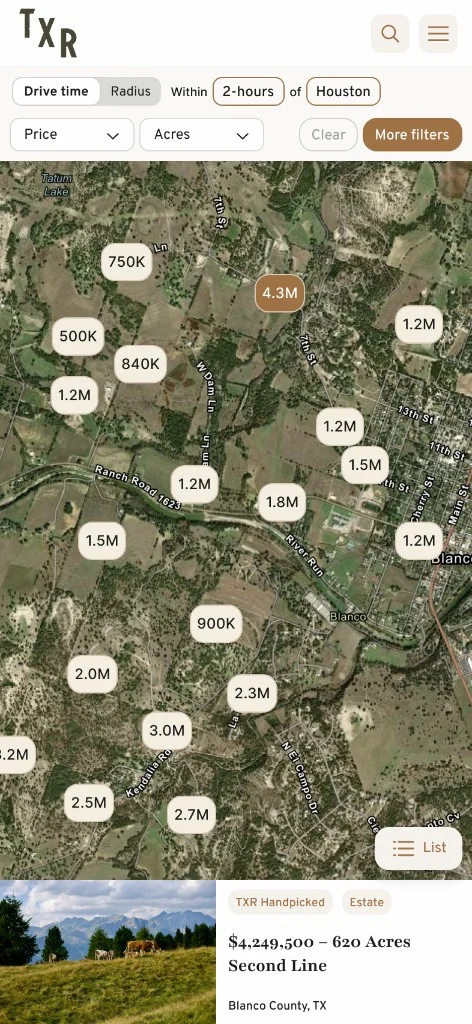
Built modular templates instead of custom builds
Reusable patterns reduced operational debt and enabled scale.
-
6
Treated internal teams as primary users
Editorial and partnerships workflows were designed as first class system components.
Early Misstep: Over Engineering the Taxonomy
The first version of the shared content architecture attempted to encode every nuance of Texas land and culture. While conceptually comprehensive, it slowed publishing and created operational friction.
We simplified the taxonomy to prioritize structural clarity over theoretical completeness.
Scalability required constraint.
Research and Validation
Validation emerged through cross signal alignment:
- Editorial publishing workflows became faster and clearer
- Partners could understand and select inventory without negotiation overhead
- Revenue targets mapped directly to defined product surfaces
- Internal teams could answer what exists where without ambiguity
System coherence became the primary validation signal.
Outcomes and Impact
Business Readiness
- Finite placement inventory mapped directly to ARR targets
- Defined pricing tiers replaced bespoke sponsorship packaging
- Structured inventory limits prevent revenue dilution
- Performance reporting surfaces embedded from launch
Revenue is no longer negotiated page by page. It is structurally embedded in the platform.
Operational Impact
- Reduced dependency on manual sponsorship assembly
- Clear governance rules separating editorial and paid content
- Shared taxonomy enabling consistent categorization across regions
- Internal clarity around ownership and inventory surfaces
User Experience Impact
- Editorial discovery remains distinct from monetization surfaces
- Clear labeling preserves trust
- Modular templates ensure consistency across regional expansion
- Cross pillar navigation supports editorial to commerce flow
Measurement Framework
The platform includes:
- Defined inventory utilization tracking
- Placement level performance reporting
- Renewal eligibility tied to engagement metrics
- Cross pillar navigation analytics
Success is measured by:
- Inventory sell through rate
- Partner renewal percentage
- Editorial to commerce conversion flow
Key Learnings
Editorial trust and monetization are not opposites. They require structure.
Taxonomy is a strategic product decision, not a CMS detail.
Revenue systems benefit from constraint as much as UX does.
Designing for internal users is as critical as designing for external ones.
Scalable platforms are governance systems, not interface systems.
Reflection
This project required holding competing incentives in tension and making tradeoffs explicit.
The hardest work was not layout or flow. It was defining boundaries between trust and revenue, flexibility and constraint.
Principal design meant shaping rules that scale.
Structure did not limit creativity. It protected it.
This experience expanded my role from interface designer to governance architect.